
How to Raise a Maintenance Request as a Tenant in the UAE (Step-by-Step)
The fastest way to log an AC, plumbing, or electrical issue in your Dubai apartment — and what your property manager should do next under RERA service standards.

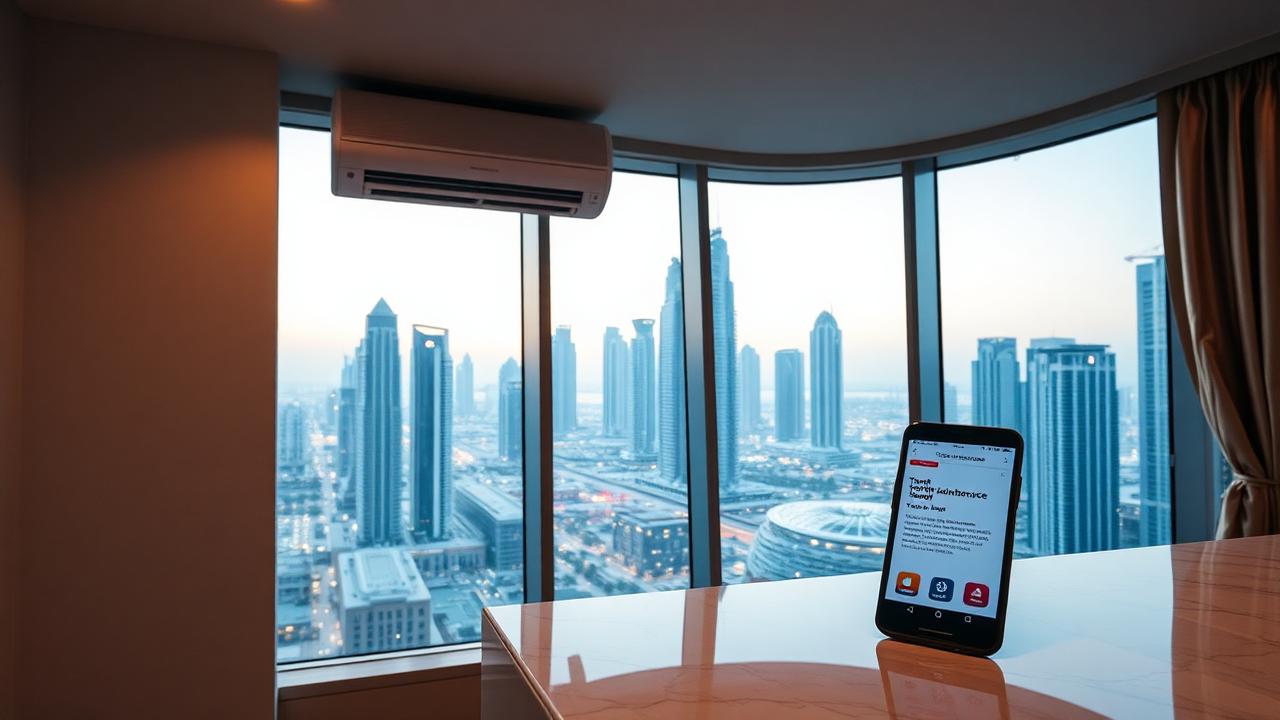
You come home to an AC that won't cool below 28°C, a dripping bathroom tap, or a socket that trips the moment you plug in your kettle. In a Dubai high-rise, the fastest way to get any of these fixed is not a phone call to the concierge — it's a well-written maintenance request. Done right, a tenant maintenance request in Dubai gets a technician at your door within 24 hours and creates the paper trail you need if the fault repeats or if it comes up at move-out. Done wrong, it sits in someone's email for a week.
- Call the concierge first for leaks, gas, fire, and lift entrapment. Everything else goes through a ticket.
- Photos + exact fixture name + preferred visit window is the difference between a same-day fix and a rebook.
- In a well-run Dubai tower, first response should be under 30 minutes and non-urgent visits within 24 hours.
- Major repairs are the landlord's; consumables and misuse damage are yours.
- If a ticket sits past the SLA, escalate up the chain and, in habitability cases, to the RDSC.
1. When to raise a request (vs. call the concierge)
Not every fault needs a ticket. Anything that threatens life, property, or the tower itself is a concierge call first, ticket second. Everything else belongs in your building's request system.
Call the 24/7 concierge immediately for:
- Active water leak from the ceiling, a burst riser, or a flooded common area.
- Gas smell in the kitchen or the corridor.
- Lift entrapment or a person stuck in a stairwell.
- Fire alarm sounding — even if you think it is a false alarm.
- Loss of all power to the unit when neighbours still have power.
Raise a standard maintenance request for:
- AC not cooling, weak airflow, or a leaking indoor unit.
- Dripping taps, slow-draining sinks, running toilets.
- Faulty sockets, tripping breakers, flickering lights.
- Appliance failures on items the landlord provided with the flat.
- Door locks, keys, access cards, and remote controls that stop working.
2. What to include in a tenant maintenance request
The single biggest reason maintenance tickets get delayed in Dubai towers is missing information. The technician arrives, the fault isn't what was described, they don't have the right part, and you get rebooked three days out. Front-load the ticket with everything the technician needs on the first visit.
- Unit number, tower name, and floor — spelled exactly as it appears on your Ejari.
- Room and exact fixture: “master bedroom split AC (Daikin)”, not “AC broken”.
- Two or three photos and, ideally, a 10-second video showing the fault.
- Preferred visit window (e.g. weekdays 6–8pm) and access permission for the technician if you can't be home.
- Any warranty information for the appliance if you have it.
3. What happens after you submit the request
A well-run Dubai tower uses a maintenance software platform that auto-triages your ticket to the right trade — MEP, plumbing, civil, appliances, or IT. Within minutes you should receive an acknowledgement with a ticket number, an estimated response time, and the trade the ticket has been assigned to.
From there, the property manager schedules a technician, confirms the visit window with you, and shares the technician's name and photo. After the visit, you sign off on the work in the app, rate the technician, and the ticket is closed. Any parts or warranty details are stored against your unit — so if the same fault happens in three months, the history is already there.
4. Realistic SLAs for Dubai maintenance requests
RERA-aligned service charters and best-in-class Dubai property management companies target the following response times. Ask your building manager to publish theirs.
- First acknowledgement of the ticket: under 30 minutes, 24/7.
- Technician on-site for a non-urgent fault: within 24 hours.
- Technician on-site for an urgent fault (no cooling in summer, no water, no power): within 4 hours.
- Ticket fully closed and signed off: within 72 hours for standard work; longer only when a specialist part is on order.
5. Who pays — you or the landlord?
Under Dubai Law No. 26 of 2007 (as amended), the landlord is responsible for keeping the unit in a habitable condition. In practice, that means structural, MEP, and major appliance repairs sit with the landlord, while consumables and damage caused by misuse sit with the tenant.
- Landlord-paid: central AC and chiller, MEP risers, waterproofing, façade, provided major appliances, in-unit pest treatments at building level.
- Tenant-paid: bulbs, remote batteries, AC filters, damage from misuse or unauthorised alterations, minor repairs typically capped at AED 500–1,000 per incident in the Ejari.
6. When your request is ignored — what to escalate
If your ticket sits open past the SLA, escalate in this order: (1) reply on the ticket asking for a status update, (2) contact your property manager directly, (3) email the OA manager for the building, (4) if the fault makes the unit uninhabitable and the landlord refuses to act, file a complaint with the Rental Dispute Settlement Centre (RDSC).
7. How TowerDesk shortens the entire loop
TowerDesk is Dubai's operating layer for modern towers. When you raise a maintenance request in a TowerDesk building, auto-triage assigns it to the right trade in under 60 seconds, the technician gets your photos and access notes on their phone before they knock, and the AI Signal layer quietly clusters repeat faults across the tower so root causes get fixed once — not one ticket at a time.
Frequently asked questions
How fast should a maintenance request be answered in Dubai?
RERA-aligned service charters usually target under 4 hours for a first response and under 24 hours for a non-urgent visit. Best-in-class Dubai buildings run tighter — TowerDesk buildings hit a median first-response of under 12 minutes.
Who pays for the repair — tenant or landlord?
Under a standard Ejari contract, structural, MEP, and major appliance repairs are the landlord's responsibility. Wear-and-tear items caused by the tenant (broken remotes, damaged fittings) are usually billed to the tenant, typically capped at AED 500–1,000 per incident.
Can I raise a maintenance request without the app?
Yes. TowerDesk buildings accept requests via the Tenant App, WhatsApp, email, or reception walk-in — they all land in the same inbox for the property manager and get the same SLA treatment.
What should I do if the maintenance team doesn't show up?
Reply on the ticket asking for a status update, then escalate to your property manager, then to the OA manager. If the fault makes the unit uninhabitable and the landlord refuses to act, you can file with the Rental Dispute Settlement Centre (RDSC).
Do I need to be home during the maintenance visit?
Not if you grant access permission in the ticket. Most Dubai buildings let you nominate a family member, a housekeeper, or the concierge to escort the technician — the visit is photographed and signed off in the app.
See TowerDesk in your building
A 30-minute walkthrough on your own portfolio, with RERA, Mollak, Ejari, and DEWA workflows built in.
Book a demoKeep reading
BackDEWA final bill, Ejari cancellation, chiller clearance, and the exact snag-list your property manager will use — one printable list.
Get your 5% security deposit back in full — what counts as fair wear and tear, how to fight unfair deductions, and the RDSC path if they refuse.
The Rental Dispute Settlement Centre resolves 90% of Dubai landlord–tenant disputes in under 45 days — here's the exact filing process, fees, and evidence required.