
Reserve Fund & Sinking Fund in UAE Buildings: What Owners Need to Know
Why a healthy reserve fund is the difference between a normal service charge and a AED 30,000 special assessment — plus how to audit yours.

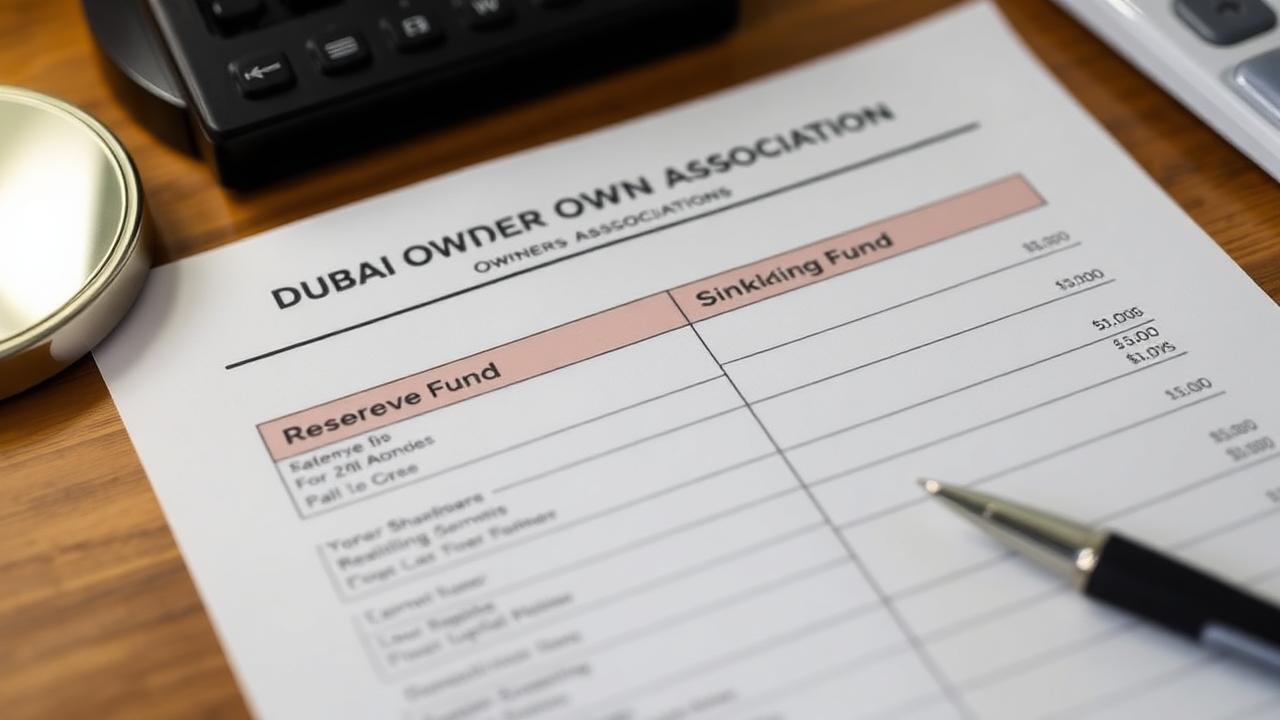
The reserve fund (sometimes called the sinking fund) is the single most important — and most ignored — line on your annual Mollak invoice. It's the pot of money that pays for the big-ticket repairs every 5–15 years: façade cleaning, chiller overhaul, waterproofing, lift modernisation. When it runs dry, owners face a special assessment that can hit AED 20,000–50,000 per unit overnight.
- Reserve fund covers 5–20 year capex cycles — façade, chillers, waterproofing, lifts.
- Healthy contribution is 15–20% of general fund; below 10% is a red flag.
- A Reserve Fund Study every 3–5 years by a licensed engineer is best practice.
- Underfunded reserves trigger special assessments — typically AED 15,000–50,000 per unit.
- Ask for the current reserve balance and last RFS at every general assembly.
What the reserve fund pays for
- Façade cleaning and repair (5–7 year cycle).
- Chiller overhaul and replacement (10–15 year cycle).
- Waterproofing of roofs, podiums, basements (7–10 year cycle).
- Lift modernisation (15–20 year cycle).
- Fire alarm and safety system major upgrades.
- MEP system replacements — pumps, generators, BMS.
The 15–20% benchmark
A healthy reserve fund contribution is 15–20% of the annual general fund. Below 10% is a red flag: the fund won't accumulate fast enough to cover the next capex cycle, and owners will face a special assessment when the façade or chiller job lands.
The Reserve Fund Study (RFS)
A professional Reserve Fund Study is a 20–40 page report by a licensed engineering firm projecting the OA's capex needs 20 years out, mapping funding requirements, and recommending annual contributions. Dubai OAs should commission an RFS every 3–5 years. If yours hasn't, request one at the next general assembly.
How to audit your reserve fund
- Ask the OA manager for the current reserve fund balance.
- Divide by number of units — is per-unit reserve at least AED 20,000–40,000 for a mid-size tower?
- Ask for the last Reserve Fund Study — if none exists, that's the biggest red flag.
- Compare projected capex vs current balance — if the fund can't cover the next scheduled major job, expect a special assessment.
What triggers a special assessment
When the reserve fund can't cover an upcoming major repair, the OA votes to charge a special assessment — a one-off levy on every owner. Typical Dubai special assessments run AED 15,000–50,000 per unit for chiller replacement or façade remediation. They're avoidable with adequate reserve fund contributions.
Frequently asked questions
What is a reserve fund in a Dubai OA?
It's the pot of money set aside for long-cycle major repairs (façade, chillers, waterproofing, lifts) so owners aren't hit with sudden special assessments when these come due.
How much should the reserve fund be?
Healthy Dubai reserve funds run 15–20% of the annual general fund. Below 10% is underfunded — expect a special assessment when the next major job comes due.
What is a special assessment?
A one-off levy on every owner when the reserve fund can't cover an upcoming major repair. Typical Dubai special assessments range AED 15,000–50,000 per unit.
Who commissions the Reserve Fund Study?
The Owners Association commissions it via vote at the general assembly, typically every 3–5 years. It's carried out by a licensed engineering firm and costs AED 15,000–40,000 depending on tower size.
Is reserve fund contribution tax-deductible?
For UAE-based individual owners there's no personal income tax, so tax deduction isn't relevant. Corporate owners under the new UAE Corporate Tax regime should consult their tax advisor on treatment.
See TowerDesk in your building
A 30-minute walkthrough on your own portfolio, with RERA, Mollak, Ejari, and DEWA workflows built in.
Book a demoKeep reading
BackWhat Dubai owners actually pay for on the annual Mollak service-charge invoice — cost centres, benchmarks, red flags, and how to reduce them.
The 90-second Mollak decoder — what every code, cost centre, and reserve-fund line on your Dubai OA invoice actually means.
Everything owners of Palm Jumeirah, JVT, JLT, Ibn Battuta, Discovery Gardens, and Al Furjan need to know about Nakheel service charges.